

Diamond-cut wheels explained: why CNC diamond cutting is the standard today
What distinguishes diamond-cut wheels, why a simple repair destroys the effect, how CNC diamond cutting works and why the diagnosis before machining is decisive.
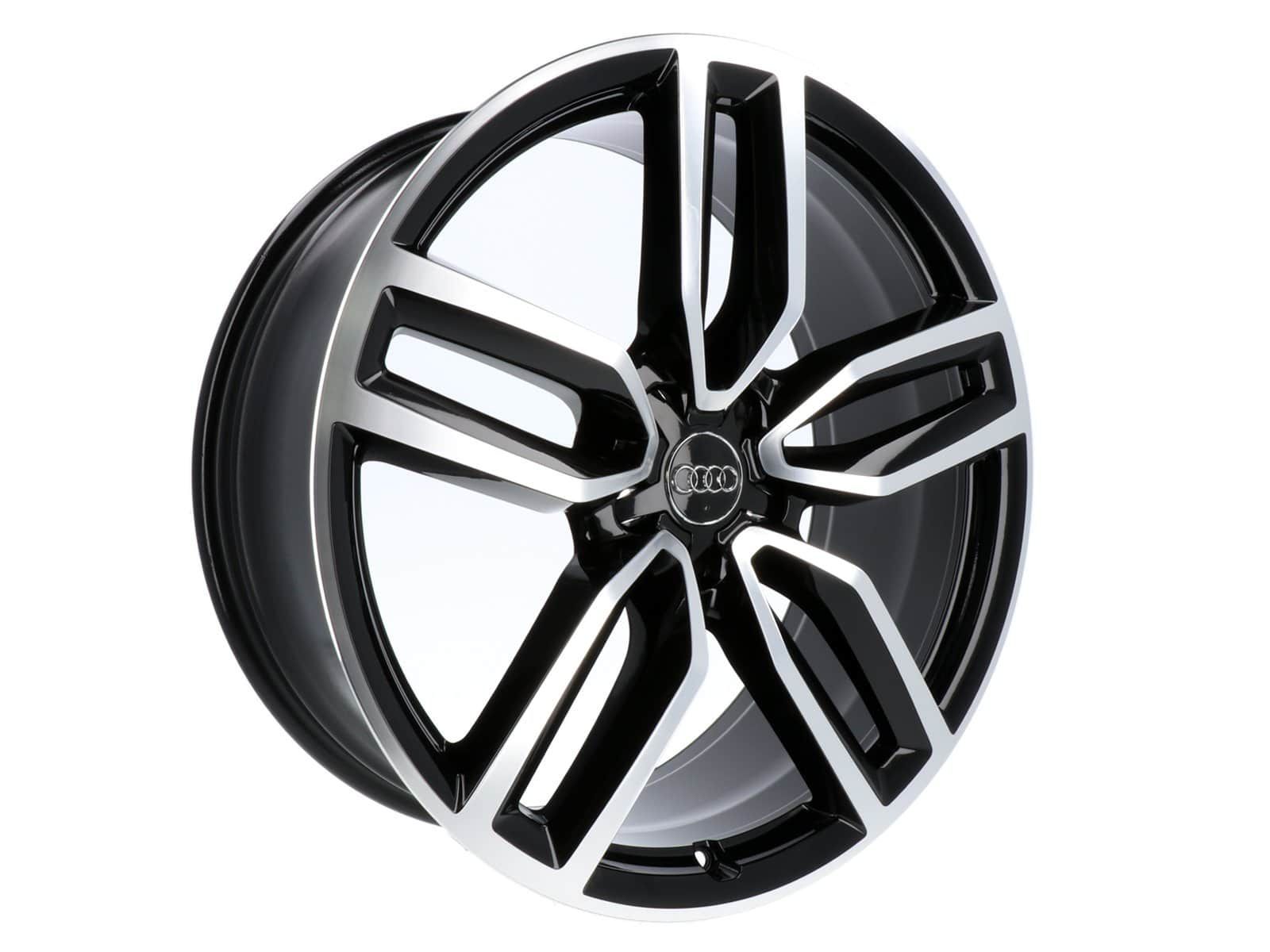
Many drivers notice the difference immediately without knowing exactly why. Two wheels can have the same size and shape, and yet one looks distinctly more refined. The reason often lies in the surface: diamond-cut wheels.
This finish is one of the most popular designs on premium vehicles today. Manufacturers such as BMW, Audi and Mercedes increasingly use diamond-cut alloy wheels because they create a particularly elegant combination of painted surfaces and metallic shine. It is exactly this surface that challenges workshops: once such a wheel is damaged, a simple repair is usually not enough. The original effect can only be restored by precise CNC diamond cutting.
What diamond-cut wheels are
The term describes a machining technique in which the surface of the wheel is machined with an extremely precise turning motion. A wafer-thin layer of metal is removed, producing a bright surface.
This technique creates the typical light edge that makes diamond-cut wheels so distinctive. Depending on the design, the effect can cover the entire face or only individual spokes. The machining is not random but follows an exactly programmed cutting pattern. That is precisely why CNC technology has become indispensable for this type of wheel work.
Why diamond-cut wheels are hard to repair
The biggest difference between painted and diamond-cut wheels lies in the surface. On painted wheels a scratch can usually be sanded and recoated. On diamond-cut wheels this does not work.
Even minor kerb damage destroys the precise structure of the surface. If this area is only sanded or painted, the typical shine disappears and the wheel looks uneven. The only way to restore the original surface is to diamond-cut the wheel again on a CNC lathe.
How CNC diamond cutting works
For CNC diamond cutting the wheel is clamped on a special lathe. A diamond tool then removes a minimal layer of material. This process produces
- an even metallic surface,
- clear light reflections,
- a result very close to the original design.
Machining is entirely computer-controlled. The machine can therefore execute exactly defined movements that would be almost impossible to reproduce by hand. This precision is decisive for complex wheel designs with many spokes.
Why CNC diamond cutting is the standard in workshops today
The share of diamond-cut wheels on the market has been growing for years. At the same time the demands on repair quality are rising. Vehicle owners expect results that are visually almost indistinguishable from the original. That is why more and more workshops rely on CNC wheel machining. The technology offers several advantages:
- precise machining of complex surfaces
- reproducible results
- even light edges on diamond-cut wheels
- lower complaint rate
CNC diamond cutting has thus become the standard process for high-quality wheel repairs in many specialised businesses. The overview of CNC lathes shows which machines are used.
Why the diagnosis before machining is decisive
Before a wheel is diamond-cut, it must be checked whether the repair is technically possible. Not every damaged wheel is suitable for re-machining. To be considered:
- thickness of the remaining material
- type of damage
- position of the damage
- original wheel design
Mainhattan-Wheels therefore works with a structured diagnosis process, the wheel inspection. Only after a precise analysis is it decided whether CNC diamond cutting is the right repair method.
Why diamond-cut wheels keep gaining popularity
The trend towards diamond-cut wheels is closely linked to the development of modern vehicle design. Manufacturers use increasingly complex surfaces to make vehicles stand out. Diamond-cut wheels combine metallic shine, high-contrast painted areas and precise light reflections. This combination creates a particularly high-quality appearance and is therefore used more and more in series production. As they spread, demand for professional repair of these wheels grows too.
Conclusion
Diamond-cut wheels are among the most demanding wheel types on the market. Their precise surface makes them visually attractive but at the same time harder to repair. That is exactly why CNC diamond cutting has become the standard process: precise machining, reproducible results and a repair quality very close to the original design. With the growing spread of diamond-cut wheels, CNC technology will continue to play a central role in wheel repair.
Frequently asked questions
What are diamond-cut wheels?
Wheels with a machined metal surface created by precise CNC turning.
Can diamond-cut wheels be repaired?
Yes, by CNC diamond cutting them again, which re-machines a thin layer of material.
Why is polishing not enough for diamond-cut wheels?
Polishing changes the structure of the surface and cannot reproduce the typical shine effect.
Why do workshops use CNC machines for this repair?
Because only CNC technology offers the precision needed to machine such wheels.