

The 7 most common mistakes in wheel repair and how to avoid them
A superficial damage assessment, the cheapest quote, the wrong process, badly repaired diamond-cut wheels, no diagnosis, ignored repair limits and looking only at the appearance.
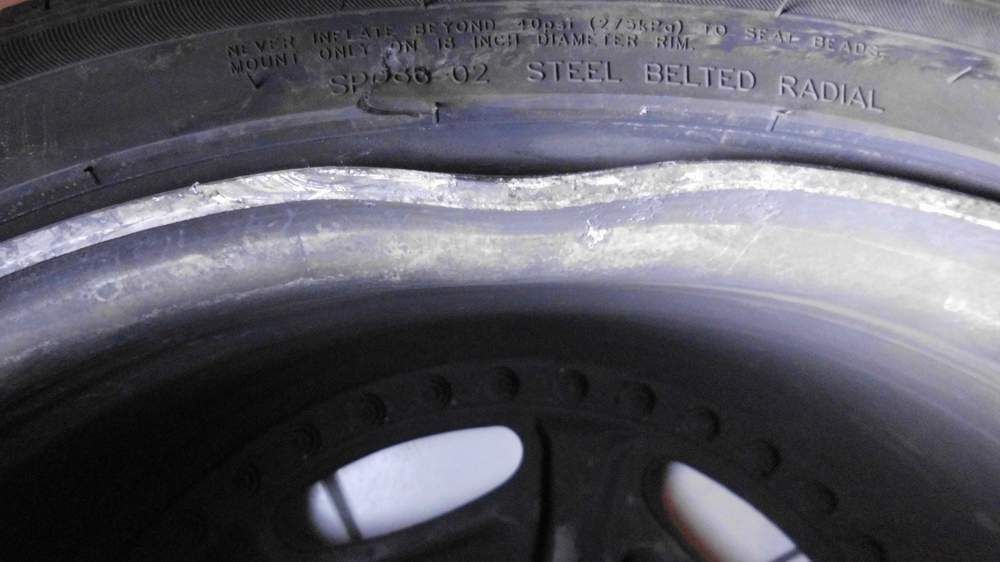
The most common mistakes in wheel repair are a wrong damage assessment, cheap quick fixes and unsuitable repair processes. It is precisely these mistakes that quickly turn a small scratch into an expensive problem.
Why these mistakes can become so expensive
A damaged wheel rim often looks harmless: a scratch, a small knock, nothing dramatic. But that is exactly where the problem begins. One wrong step can turn a small amount of damage into several hundred euros of extra cost. In practice, workshops see the same mistakes again and again. In the Rhine-Main region, where many vehicles run on high-quality wheels, wrong decisions have a particularly strong effect.
Mistake 1: Judging the damage only superficially
“It’s only a scratch.” That is one of the most common misjudgements. What is visible is often only the surface. Underneath, material weaknesses or deformation may already have developed. The result: the wrong repair method and a poor outcome. Better: always have a professional diagnosis carried out.
Mistake 2: Choosing the cheapest wheel repair
Many people look for the cheapest wheel repair nearby. Cheap often means rushed work, simplified processes and less durability. The wheel looks good in the short term, but not in the long term. Better: do not compare prices alone, but processes and quality.
Mistake 3: Using the wrong repair process
Not every wheel can be treated in the same way. Typical mistakes are polishing instead of targeted machining and painting instead of the appropriate surface solution. The wheel loses its original appearance. Better: the repair method has to suit the type of wheel.
Mistake 4: Repairing diamond-cut wheels incorrectly
A particularly critical point. Diamond-cut wheels are created by precise machining, not by simple polishing. Trying to rework this surface by hand leads to the loss of the characteristic light edge, to visible differences and to an uneven structure. Better: this calls for CNC diamond cutting with specialised technology.
Mistake 5: Skipping the diagnosis completely
Many want to save time and start straight in with the repair. Then nobody checks how deep the damage goes, whether there are structural problems and which method actually makes sense. That leads to wrong decisions right from the start. Better: analyse first, then decide. At Mainhattan-Wheels this is the wheel inspection with 3D laser measurement.
Mistake 6: Ignoring the limits of repair
Not every wheel can be repaired. Critical cases are cracks, severe deformation and safety-relevant damage. Anyone who has such a wheel repaired anyway risks safety problems and renewed damage. Better: recognise the limits and replace the wheel in case of doubt.
Mistake 7: Looking only at the result, not at the durability
“It looks fine to me.” But the decisive question is: how will the wheel look after six months? Poor repairs often only show themselves later: the paint comes away, the surface becomes uneven, the gloss disappears. Better: look for long-term quality, not just the first impression.
Why experience is decisive
Most of these mistakes do not happen on purpose, but because experience is missing. A professional wheel repair is not a simple cosmetic process. It requires a precise analysis, the right processes and matched technology. Mainhattan-Wheels avoids these mistakes through
- a structured damage diagnosis,
- experience from many repair cases,
- a focus on high-quality wheel refinishing,
- specialisation in demanding surfaces.
More on this under Quality.
Have your wheel damage assessed properly
Not sure whether your wheel can be repaired or which process makes sense? A professional assessment saves time, money and wrong decisions. Send us pictures of your damage via the request form and receive a clear recommendation.
Conclusion
The biggest problems in wheel repair do not arise from the damage itself, but from wrong decisions. Anyone who knows and avoids the typical mistakes reduces costs, achieves better results and secures long-term quality. In the end it is not the repair that decides, but the right decision beforehand.
Frequently asked questions
What are typical mistakes in alloy wheel repair?
A wrong assessment, cheap quick fixes and unsuitable processes.
Why should you not go by price alone?
Because cheap repairs often lead to poor quality and follow-up costs.
Can a bad repair damage the wheel?
Yes, especially with diamond-cut or high-quality wheels.
How do you avoid problems with wheel repair?
Through a professional diagnosis and the choice of a specialised workshop.