

Removing corrosion from alloy wheels: causes, processes and protection
How pitting, white deposits and galvanic corrosion form on alloy wheels, how to recognise corrosion reliably, which process gives a lasting result for each type of damage and how to slow new damage down.
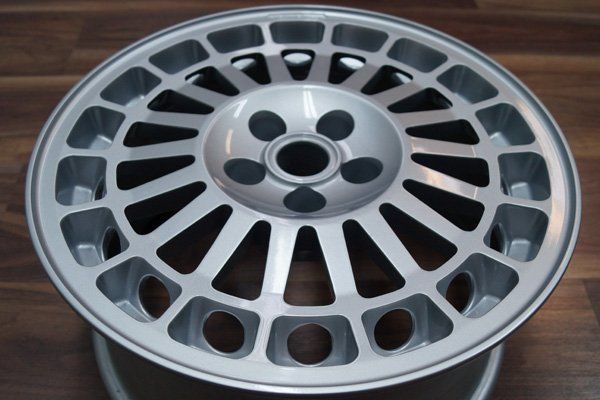
Removing corrosion from alloy wheels means completely detaching the white oxidation caused by a damaged protective layer from the wheel and then protecting the surface again, usually by stripping, machining and recoating. Aluminium does not rust like steel; under the influence of moisture, road salt and mechanical damage it forms a powdery, whitish oxide layer that spreads over time. This article shows how this corrosion arises, how to recognise it reliably and which process gives a lasting result.
What is corrosion on alloy wheels?
Corrosion on alloy wheels is not classic rust formation but a progressive oxidation of the aluminium. Aluminium naturally has a thin oxide layer that protects the metal from external influences, comparable to a natural seal. This oxidation is normal and initially unproblematic. Only when the protective layer is damaged by scratches, stone chips or aggressive cleaners does the actual corrosion begin, a process that continues unless something is done about it.
The result is a white, powdery deposit, colloquially often called “white rust”. Technically it is aluminium oxide, which forms as soon as moisture and chlorides, for example from road salt, get underneath the damaged protective layer.
The most common forms
Not every kind of corrosion looks the same, and not every kind is equally critical. In practice we mainly encounter three forms:
- Pitting: small, localised depressions, usually triggered by chlorides from road salt. Visually inconspicuous, but structurally the most critical variant.
- White deposits: powdery, chalky deposits on the surface, the most visible and most common form, usually still superficial.
- Galvanic corrosion: occurs when aluminium comes into contact with other metals such as steel and moisture is added, typically at wheel bolts or hub caps.
What causes corrosion on alloy wheels?
In most cases it is not a single cause but an interplay of several factors:
- Road salt and moisture: the most aggressive combination, especially in winter use
- Mechanical damage: kerb damage or a stone chip opens up the protective layer, water and salt penetrate.
- The wrong cleaning products: acidic wheel cleaners with a pH value below 7 attack the clear coat directly.
What many people underestimate: it almost always starts with a tiny, barely visible injury to the surface. The actual damage only develops afterwards, often over weeks, unnoticed beneath the paint.
How do you recognise corrosion on alloy wheels?
The difference between ordinary dirt and genuine corrosion can be settled with a simple test: if the deposit wipes off, it is usually brake dust or surface rust from the brake system. If it sits firmly, comes back even after washing or is visibly underneath the paint, it is normally corrosion. Typical warning signs are:
- a rough surface in individual spots, even though the wheel has just been cleaned
- white patches that cannot be wiped away
- the paint bulges slightly in one place, as if something were working underneath it
It becomes safety-relevant when the wheel flange corrodes. That can lead to gradual loss of air from the tyre, an effect many people only notice once the tyre pressure has already dropped noticeably.
Which processes really help?
Not every treatment is suitable for every degree of damage. With deeper corrosion, complete stripping is usually unavoidable in order to be able to assess the condition of the base metal at all.
| Type of damage | Suitable process | Result |
|---|---|---|
| Superficial white deposits | Stripping, glass bead blasting, recoating | visually restored |
| Beginning pitting | Stripping, checking the base metal, recoating | structure secured |
| Deep pitting on the wheel well | Expert assessment, repair if necessary | safety-relevant |
| Galvanic corrosion on bolts | Cleaning, replacing the fasteners | prevents recurrence |
Important: simply painting over the corrosion without removing it completely only postpones the problem. The corrosion carries on working under the new layer until it becomes visible again, usually sooner than expected. Anyone who finds their alloy wheels corroded should therefore have the cause treated, not just the appearance. With heavily corroded classics that means wheel restoration.
Care and corrosion protection: what helps in the long term
Corrosion cannot be prevented entirely, but it can be slowed down considerably, with consistent corrosion protection rather than occasional action.
- Clean wheels with pH-neutral cleaners instead of household products, especially after contact with road salt
- Have small kerb damage repaired promptly instead of ignoring it
- Seal the wheels after a professional reconditioning to give the new protective layer additional security
Anyone who has their wheels sealed after the repair noticeably extends the time before new damage occurs.
Conclusion
Removing corrosion from alloy wheels means more than polishing a wheel bright. If the cause is not eliminated, the problem will be back within a few months, usually in the same place and often worse than before. The right surface treatment decides whether the result lasts. If you are unsure how far corrosion has already progressed, have the wheel checked professionally instead of experimenting yourself. Send us pictures via the request form.
Frequently asked questions
How do you remove corrosion from alloy wheels properly?
By stripping completely, checking the base metal, machining the affected area and then recoating. Superficially painting over it is not enough.
Does a wheel sealant protect permanently against corrosion?
It slows the process down considerably, but it does not replace a proper repair where damage already exists.
How do you protect alloy wheels against corrosion in the long term?
Through regular cleaning with pH-neutral products, prompt repair of small damage and a sealant after every professional reconditioning.
Why do alloy wheels corrode particularly often in winter?
Because road salt in combination with moisture attacks the protective layer chemically more strongly than under normal conditions. Existing small areas of damage get worse faster as a result.
What does it cost to have corrosion removed from alloy wheels?
That depends on the extent of the corrosion, the wheel size and the process required. Superficial cases are considerably cheaper than deep pitting with subsequent recoating. The fixed prices for the processes are listed in the price list; only an inspection of the individual wheel can give a reliable assessment.