

The most common mistake after a wheel repair and why it gets expensive later
Straight after the repair the wheel looks good. Whether the work was of high quality only becomes clear months later. How to recognise a durable wheel repair.
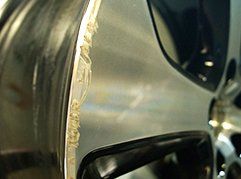
Straight after the repair the wheel looks perfect. That is often precisely the problem. Many defects do not show up immediately after a wheel repair, but weeks or months later. The gloss changes, the surface suddenly looks uneven, small differences become visible that nobody noticed before.
At this point the real question begins: was the repair genuinely of high quality, or did it only look good in the short term? After a repair, many vehicle owners concentrate solely on the first impression. In practice, however, something else decides the quality: how stable and even the surface stays in the long term.
Why many wheel repairs look better at first than they are
Modern wheels can be improved visually very quickly. That is why many repairs seem convincing at first. The real problem only shows in everyday use: moisture, temperature swings, brake dust, salt and UV radiation put the machined surface under permanent stress.
If the repair was not prepared cleanly or was carried out with unsuitable processes, visible differences appear later. With high-quality or diamond-cut wheels in particular this quickly becomes apparent.
The most common mistake after a wheel repair
The biggest mistake happens right after the repair: the wheel is judged on appearance alone. “It looks fine again.” That assessment is not enough, because the real quality only shows later:
- Does the surface stay even?
- Does the gloss change?
- Do dull patches appear?
- Does the structure react sensitively to the weather?
With modern aluminium wheels it is not the appearance on day one that determines long-term quality, but the stability of the surface.
Why diamond-cut wheels are particularly critical
With diamond-cut wheels, differences in quality become apparent particularly quickly. The reason lies in the surface itself: the precisely machined structure reflects light very evenly. Even small deviations change this effect visibly.
If the repair is carried out sloppily, different light reflections, dull transitions and restless surfaces often appear later. Many of these differences do not show up immediately after the work, but only after some time.
Why quick, cheap repairs cause problems later
Many vehicle owners want to have damage fixed as cheaply as possible. This is exactly where long-term quality problems often arise. Quick repairs concentrate on improving the appearance of the surface in the short term. The actual material and surface structure is not always given sufficient consideration.
With high-quality aluminium wheels, premium vehicles and diamond-cut wheels, that frequently leads to visible changes later. In practice it turns out that the repair itself does not become the problem; the lack of durability afterwards does.
Why professional wheel refinishing is more than appearance
A high-quality wheel repair does not begin with sanding or painting, but with the right analysis. What matters is which surface is involved, how deep the damage goes and which process makes sense in the long run. This is exactly where professional repairs differ from short-term cosmetic solutions.
That is why Mainhattan-Wheels works with structured diagnostic and machining processes rather than standardised quick repairs. Every wheel is inspected before the work begins, because high-quality wheels need more precise processes in order to stay even in the long term.
Why poor repairs turn out more expensive later
Many people first try to save money and then invest twice. If surfaces change after a short time, further repair costs arise, more involved work is needed or individual wheels even have to be replaced. On premium vehicles, visible differences also affect the look of the car, the retention of value and lease returns. What seemed a cheap repair often turns into a considerably more expensive decision.
Why long-term quality has become more important
Modern wheel surfaces react more sensitively than earlier generations. At the same time visual expectations are rising. High-quality vehicles already look less well cared for because of small differences on the wheels. That is why many vehicle owners today pay more attention to even surfaces, long-term durability and professional workmanship. A high-quality wheel repair should not only look good in the short term but stay stable in the long term.
When a follow-up check makes sense
Many changes develop gradually. A later check can therefore be worthwhile, especially with sensitive surfaces. After winter use, heavy loads or frequent cleaning, differences often only become apparent later. An early inspection helps to spot smaller changes in good time, before larger damage develops. We give a two-year guarantee on the durability of our surface coatings.
Conclusion: the quality of a wheel repair does not show on day one
Most bad repairs cannot be spotted straight away. Only after weeks or months does it become clear whether the surface was worked cleanly or only looked good for a short while. A wheel repair should therefore not be judged on the first impression, but on durability, evenness and long-term surface quality. In the end it is not the gloss immediately after the repair that counts, but how the wheel looks later.
Frequently asked questions
Why do some wheel repairs look worse later?
Because unsuitable processes or poor preparation cause visible changes in the long term.
Are diamond-cut wheels more sensitive after a repair?
Yes. Differences in the surface or in the way it catches the light become visible more quickly there.
How do you recognise a high-quality wheel repair?
By an even surface, a stable gloss and long-term durability.
Why can cheap repairs turn out more expensive later?
Because rework or renewed repairs cause additional costs.