

Wheel sealant after a repair: which products really last
Wax, quartz or ceramic: how long each type of wheel sealant protects after reconditioning, what matters when applying it and why the moment straight after the repair is decisive.
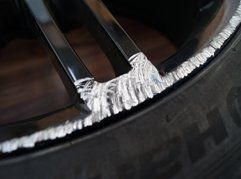
A freshly reconditioned wheel looks like new. And at exactly this moment many vehicle owners skip the decisive step: the wheel sealant. Yet it is not an optional extra but the only active protection against brake dust, road salt and moisture. And not every product delivers what it promises.
Why the sealant after the repair matters so much
A professional wheel reconditioning creates a new, clean surface. Without a protective layer, that surface is immediately exposed to external influences.
Brake dust is the biggest problem. It is produced every time you brake, settles on the wheel at high temperatures and burns into the surface. Without a sealant it sticks; with a sealant it beads off. Add to that road salt in winter, moisture and UV radiation. They attack paint, powder coating and polished surfaces alike.
The three most important types of sealant
Wax and PTFE
Simple wheel waxes and PTFE products are the cheapest option. They are easy to apply and produce a visible gloss. The problem: they last two to a maximum of six months, and often less in winter use with daily brake dust. Anyone who depends on durability will not get far with these products.
Quartz and silicon sealants
Quartz-based products offer considerably better protection. The beading effect is more pronounced and they last six to twelve months, depending on care and use. These products suit vehicles in normal everyday use and are a good middle way between effort, cost and durability.
Ceramic sealant
Ceramic products are currently the most capable option for wheel care. They offer:
- a service life of 12 to 24 months
- heat resistance beyond 800 °C, which matters in the brake area
- a self-cleaning beading effect through nanoparticles
- compatibility with painted, powder-coated and polished surfaces
The drawback: application requires clean preparation and a certain amount of experience. If the wheel is not completely cleaned and degreased before application, even the best ceramic sealant will not adhere permanently.
| Sealant | Service life | Suitable for |
|---|---|---|
| Wax / PTFE | 2 to 6 months | short-term gloss, seasonal vehicles |
| Quartz / silicon | 6 to 12 months | normal everyday use |
| Ceramic | 12 to 24 months | year-round use, heavy braking loads |
What matters during application
The product is only one part of the equation. The preparation is decisive. Before every wheel sealant application the following applies:
- Clean the wheel thoroughly with a pH-neutral wheel cleaner
- Remove brake dust and residues completely
- Let the wheel dry, no residual moisture
- Apply the sealant evenly and observe the dwell time
- Remove the excess and observe the curing time
Anyone who cuts this sequence short gives away a large part of the protective effect, regardless of the product.
Professional application or doing it yourself
One point many people underestimate: specialist businesses apply the sealant directly after the reconditioning, onto a perfectly prepared, degreased surface. That is the optimal moment. Adhesion is at its maximum because there are no residues from road use.
At Mainhattan-Wheels the sealant is the final step of every wheel reconditioning. Ceramic products designed for professional use are applied. With powder coating and painting, a clear acrylic powder additionally provides lasting protection for the surface.
Conclusion
A wheel sealant after the repair is not a luxury but the logical conclusion of a professional reconditioning. Anyone who goes for cheap wax products is buying short-term gloss. Anyone who goes for ceramic or quartz-based sealants protects the new surface sustainably. What is decisive is not only the product, but the right moment and clean preparation. Combine the two and you measurably extend the life of the wheel reconditioning.
Frequently asked questions
What does a wheel sealant achieve?
It actively protects the surface against brake dust, road salt and moisture and considerably extends the life of the reconditioning.
How long does a ceramic sealant last on wheels?
With correct preparation and regular care, 12 to 24 months. Cheap wax manages only two to six months.
Ceramic or nano sealant: which is better for wheels?
Ceramic lasts longer and is more heat resistant. Nano sealants are easier to apply but less durable.
What does a professional wheel sealant cost?
At Mainhattan-Wheels the sealant is part of the reconditioning and included in the total price; reconditioning starts at €150 per wheel. The fixed prices for the individual processes are listed in the price list.