

Powder coating matt or gloss: what really lasts longer
Gloss levels in numbers, the pros and cons of a matt and a gloss finish in daily use, why the material hardness is the same and why the preparation decides durability.
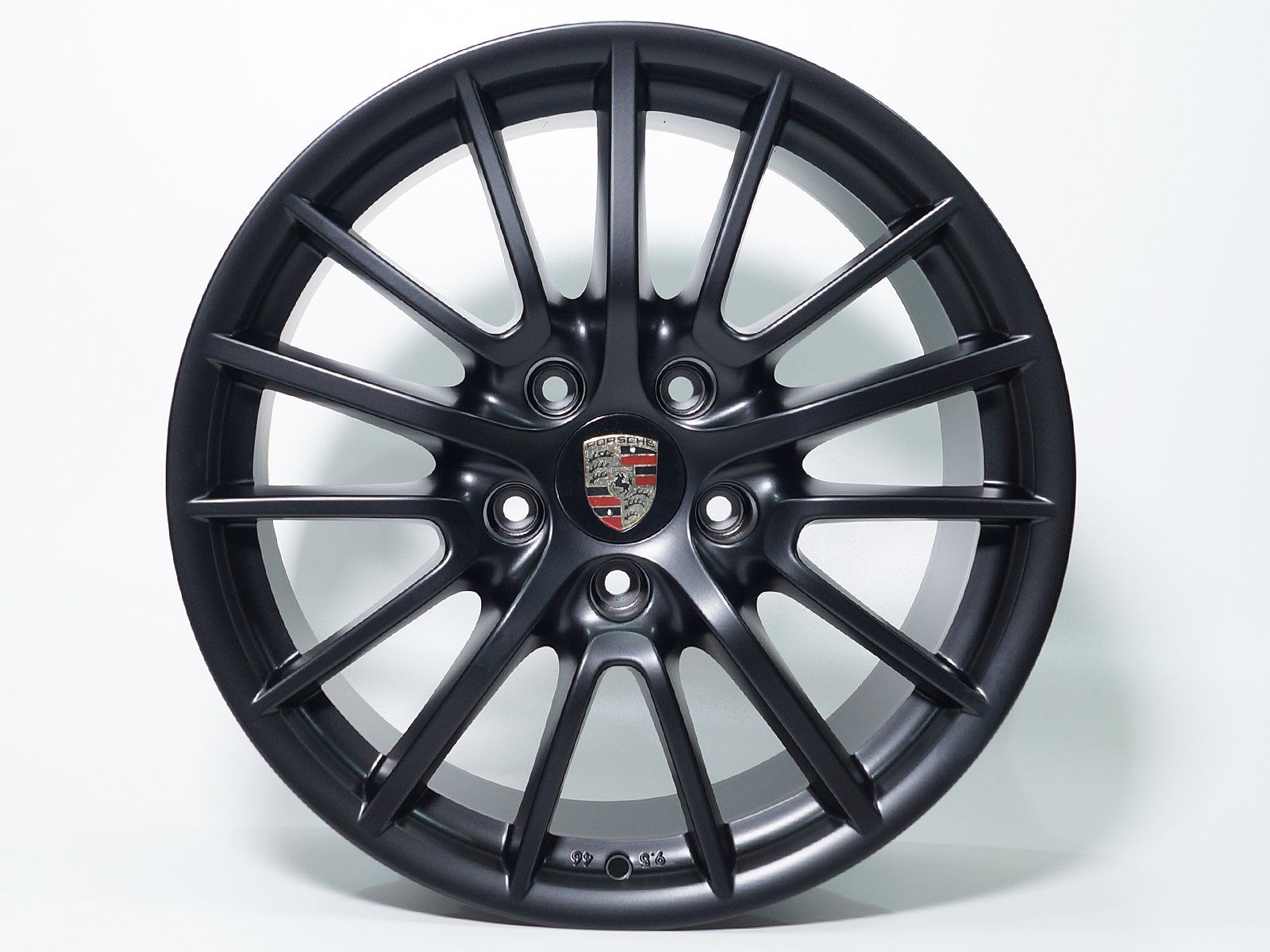
Why powder coating makes sense on wheels
Before the matt-or-gloss question makes any sense, it is worth looking at the process itself. In powder coating, unlike in classic painting, a powder paint is applied electrostatically and then cured in the oven at around 180 to 200 °C. What results is not an applied layer in the classic sense but a chemical bond with the aluminium. For wheels that matters for several reasons:
- Greater everyday resilience: the cured layer is more resistant to stone chips, kerb contact and mechanical stress than pure wet paint.
- Even film thickness: typically 60 to 120 µm, without the runs or drips that can occur with liquid paint.
- No solvent: which means none of the fumes that arise during drying with classic paint.
The comparison with wet paint is covered in the article on the cost of powder coating. Here it is about the decision that comes after: should the result be matt or gloss?
How the difference between matt and gloss comes about
A widespread misconception is that matt and gloss are two different coating processes. In fact the gloss level is controlled through the composition of the powder paint itself, usually by so-called matting agents. Technically it is measured as a percentage:
- Matt sits at roughly 20 to 30% gloss level.
- Satin gloss is around 60 to 70%.
- High gloss reaches 85% and above.
Important: hardness and chemical cross-linking hardly differ between the gloss levels. The difference lies not in the toughness but in what becomes visible on the surface.
Matt finish: what stands out in practice
Matt wheels have been in fashion for years, especially in dark colours. The low-reflection surface looks restrained and modern.
Advantages in daily use
- hides small irregularities in the substrate better than gloss surfaces
- looks particularly premium and understated in dark colours
- less conspicuous light reflection in direct sunlight
What many people only notice after buying
Matt surfaces show fingerprints, brake dust and light soiling more clearly than gloss surfaces, not because they attract more dirt but because the matt structure scatters light differently. Care is also needed when cleaning: aggressive cleaners or the wrong pressure washing can locally change the structure and leave patches of uneven gloss.
Gloss finish: the technical advantage that is often overlooked
A gloss finish looks classic and timeless. Its practical advantage shows in maintenance: the closed, smooth surface offers dirt less to hold onto, which makes gloss wheels easier to clean.
One point that is rarely mentioned but matters after a previous repair: the higher the gloss level, the more visible small irregularities in the substrate become. On a wheel that has already been straightened, high gloss can bring out fine traces of the work more strongly than a matt finish. Experienced businesses therefore also choose the finish according to the actual condition of the wheel surface.
Matt or gloss: the direct comparison
| Criterion | Matt finish | Gloss finish |
|---|---|---|
| Gloss level | approx. 20 to 30% | approx. 85% and above |
| Visibility of brake dust | higher | lower |
| Hides irregularities | better | worse |
| Cleaning effort | slightly higher | lower |
| Basic hardness of the coating | comparable | comparable |
| Sensitivity to incorrect care | higher | lower |
The comparison shows there is no finish that is fundamentally more durable. The material hardness barely differs. What matters is how well the chosen finish suits the usage profile and the condition of the wheel.
What actually determines durability
Whatever the finish, one thing holds: the longevity of a powder coating is decided during preparation. Complete stripping, correct priming and a precisely controlled curing process influence corrosion protection far more strongly than the matt-or-gloss question. With clean pre-treatment and a suitable powder coating line, both options last for years, even with daily use, road salt in winter and changeable weather.
What does powder coating cost?
The cost hardly differs between matt and gloss, since the material input and the process are largely identical. Larger price differences tend to come from wheel size, necessary preparatory work or requested special colours. At Mainhattan-Wheels powder coating costs €175 per wheel incl. VAT (see price list). Before coating we check which finish suits the actual condition of the wheel, not just the desired look. Examples of matt and gloss surfaces are shown in the overview of wheel colours.
Conclusion
Matt or gloss is first of all a question of looks, but not only that. The gloss level influences how visible brake dust, fingerprints and small irregularities become in daily use, while the basic material hardness remains comparable in both versions. Anyone having an already repaired wheel coated should therefore choose the finish not only by taste but also by how much the surface needs to forgive. In the end it is above all the quality of the preparation that determines whether the coating lasts.
Frequently asked questions
Does a gloss finish last longer than matt?
The material hardness is comparable in both. Gloss surfaces are simply easier to clean and look after.
Why do matt wheels look dirty more quickly in daily use?
The matt structure scatters light differently, which makes brake dust and fingerprints appear more visible than on gloss.
What does a powder coating cost on average?
The cost hardly differs between matt and gloss, but it does depend on wheel size and preparatory work. At Mainhattan-Wheels it is €175 per wheel.
Can matt wheels be coated in gloss later on?
Yes, but that requires complete stripping and recoating with a different powder paint.