

Wheel colour: how to find the right shade for your wheels
How to find the colour code of your wheels, why remixed paint differs from the original, which new colours are popular and why Mainhattan-Wheels uses the manufacturers' original wheel paints.
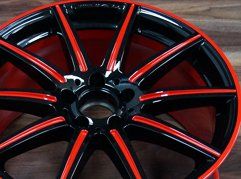
A new wheel colour can change the entire appearance of a vehicle, in the best and in the worst sense. Anyone who chooses the wrong colour, or misses the original shade when refinishing, sees the result immediately: a visible colour difference between the wheels and the rest of the vehicle. This article shows how to find the right shade, what matters with wheel paint and why the choice of the right coating is more than a question of taste.
Why the wheel colour matters so much
Many drivers choose the wheel colour purely on appearance at first: black, silver or an individual special colour. That is fundamentally right, but it does not go far enough. The colour chosen also influences how easy the wheel is to care for later, how visible brake dust and small scratches are and how the vehicle looks as a whole.
Colour and type of vehicle
Dark shades look sporty and hide brake dust well, but show scratches more clearly. Light wheel colours such as silver or white look classy, but make dirt visible more quickly. Anyone choosing a wheel colour to suit the vehicle should consider the paint colour, the body shape and their personal style together, not in isolation.
How to determine the right wheel colour
Restoring the original shade
Anyone who wants to refresh their wheels in the original colour after damage faces a bigger challenge than many expect. The colour code of the wheels is usually found on a sticker in the wheel arch, in the vehicle documents or directly from the manufacturer; with some brands it can also be looked up via the chassis number.
Yet even with a known colour code, visible deviations often arise in practice: if the colour is remixed instead of the original material being used, the shade differs noticeably from the actual original, a problem that many workshops and vehicle owners only notice after the paint has been applied. A careful colour comparison in daylight usually shows such deviations more clearly than workshop lighting does.
Choosing a new colour
Anyone who deliberately opts for a new colour has considerably more freedom than with a pure restoration of the original. Popular options are:
- classic silver or anthracite for a timeless look
- black, matt or gloss, for a sporty appearance
- bicolour combinations with a diamond-cut rim
- individual special colours from the RAL palette
A selection of our surfaces is shown in the overview of wheel colours.
Original wheel paint instead of a colour mix
This is exactly where the biggest difference arises in practice. As standard, a remixed paint is frequently used for a wheel repair, with the risk of a visible colour deviation from the original. For vehicle owners who value a result true to the original, this is an underestimated factor when choosing a workshop.
Mainhattan-Wheels takes a different route here: the wheel paints used come directly from the wheel production of the respective manufacturers. Primer, colour and clear coat are available as a ready-matched system, without mixing and without compromises on the shade. The result is a wheel refinish in which the original shade really is restored true to the original instead of merely being approximated. More on this under original wheel paints.
Why the surface finish also plays a part
Besides the pure colour comparison, the finish also plays a role. Matt, satin and gloss coatings reflect light differently. Even with an identical colour code, a different surface finish can change the impression of the colour. Anyone switching to matt paint should plan for that deliberately instead of accepting it as a side effect of the repair.
What else to consider with the coating
Not every colour is suitable for every process. With powder coating the choice of colours is usually greater than with wet paint, while individual glazes or candy effects are often only possible with the paint process. Before deciding, it is therefore worth asking whether the desired colour can be achieved with the planned process. We explain both processes under powder coating and painting.
Conclusion
Finding the right wheel colour is more than a matter of taste. It determines the appearance, the care required and, in the case of a repair, how true to the original the result is. Anyone who wants to restore the original shade should go for original wheel paint rather than a remixed colour in order to avoid visible deviations.
Frequently asked questions
How do I find the right wheel colour for my vehicle?
Take your bearings from the type of vehicle and the body colour: dark shades look sporty, light ones look classier.
Where do I find the colour code of my wheels?
Usually in the wheel arch, in the vehicle documents or directly from the vehicle manufacturer.
Why does remixed wheel paint often differ from the original?
Because it approximates the shade instead of reproducing it exactly. Small deviations remain visible.
Is original wheel paint better than commercially available paint?
Yes, because it comes directly from wheel production and matches the original shade exactly.