

Steering wheel vibrating after a kerb or pothole? Causes, costs and what to do now
Radial run-out, lateral run-out or imbalance: why the steering wheel shakes from around 80 km/h after kerb contact, how a run-out check gives you clarity, what the repair costs and what you should do now.
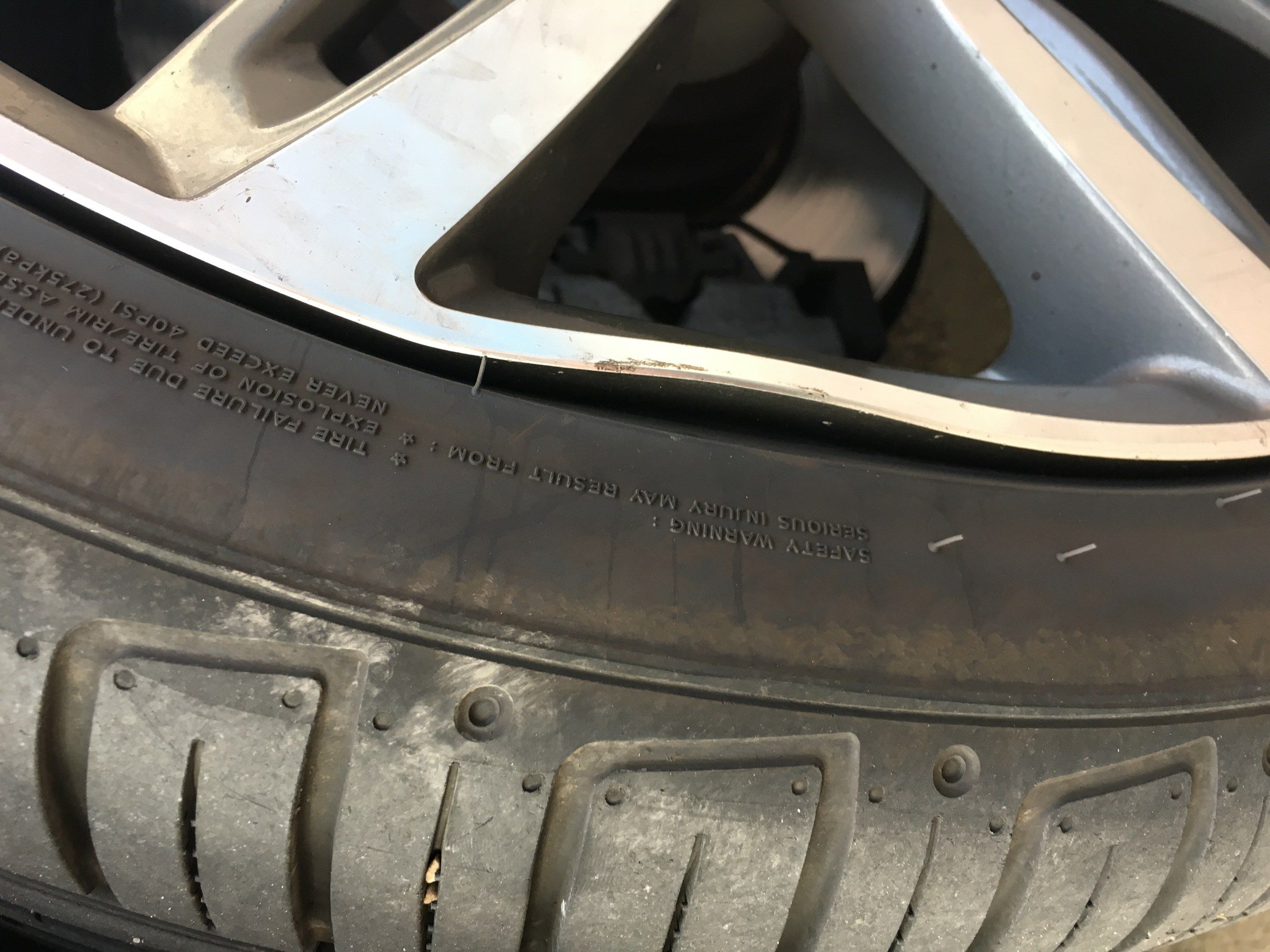
A short jolt, a dull thud, and a few kilometres later the steering wheel starts to shake. That is exactly the moment when uncertainty sets in for most drivers: is this dangerous? Do I need to get to a workshop straight away? When the steering wheel vibrates there is almost always a clear technical cause behind it, and it can usually be put right. This article explains why it happens, what the repair realistically costs and when action is needed.
Why the steering wheel vibrates: the most common causes
In most cases the cause lies in the wheel itself, more precisely in its run-out accuracy. A vibrating steering wheel is not a random symptom but a precise signal that can be interpreted well with experience.
Radial run-out and lateral run-out
A hard impact against a kerb or a deep pothole can deform the wheel slightly. This is referred to as radial run-out or lateral run-out: the wheel runs slightly oval instead of round. This irregularity is transmitted noticeably to the steering while driving. Typically, the steering wheel only starts to vibrate from around 80 km/h and gets worse as speed rises. At low speed there is often nothing to feel, which masks the cause at first.
Imbalance as the second most common cause
An imbalance can also occur after kerb contact, for example if a balancing weight comes off. The distinction is crucial: an imbalance can usually be corrected by balancing, a bent wheel cannot. If the two are confused, the workshop may balance the wheel several times without success.
Other possible causes
- damaged tyre carcass with bulges or flat spots
- misaligned axle geometry after the impact
- more rarely: damage to a wheel bearing or the suspension
A wheel alignment gives clarity if the cause does not clearly lie in the wheel.
How do you know the wheel is the problem?
A few simple observations help with an initial assessment:
- The vibration only appears above a certain speed.
- The steering wheel shakes evenly, not in jerks.
- There is no additional noise when braking.
- The tyre shows no visible bulge or deformation.
If these points apply, a lot points to a bent wheel. A reliable answer, however, only comes from a check on the ramp with a dial gauge; it cannot be judged seriously at the roadside. At Mainhattan-Wheels the wheel is additionally checked by 3D laser measurement. This method reveals deviations in the tenth-of-a-millimetre range, more precisely than a purely visual inspection.
What does repairing radial run-out cost?
The good news: in most cases the wheel can be straightened without buying a new one. The cost depends on the extent of the damage:
- Slight radial run-out: often correctable as part of a normal wheel repair
- Medium deformation: more involved straightening of the wheel required
- Structural damage: here replacement is often the safer choice.
At Mainhattan-Wheels run-out repair costs €150 per wheel incl. VAT (see price list). One important point: not every workshop takes radial run-out seriously enough. If the wheel is only repainted without correcting the run-out, the vibration remains despite the fresh looks. That is a common reason for complaints in practice.
What to do now
If you feel a vibration after a kerb or pothole:
- Reduce speed and observe how the car behaves
- Check wheel and tyre for visible damage
- Visit a workshop for a run-out check
- Consider a wheel repair rather than buying new
Anyone looking for a workshop should ask specifically for a run-out measurement; not every provider checks this as standard. Ignoring the vibration risks accelerated tyre wear and unnecessary additional strain on the steering and suspension. Existing radial run-out can also lead to questions at the next roadworthiness inspection.
Conclusion
A vibrating steering wheel is no reason to panic, but it is a clear signal that should be taken seriously. In most cases radial run-out of the wheel is behind it, caused by kerb contact or a pothole. A proper wheel repair with an exact run-out check often solves the problem completely, and at considerably less cost than a new wheel. If you are unsure, do not simply have the wheel repainted, but have the run-out checked first with the right measuring equipment. Send us an enquiry via the request form.
Frequently asked questions
Why does the steering wheel vibrate?
Usually because of radial run-out or an imbalance in the wheel, caused by kerb contact, a pothole or a balancing weight that has come off.
Can a bent wheel be repaired?
Yes, in most cases. Only with severe deformation or cracks is replacement necessary.
Is balancing enough to cure the vibration?
Only in the case of an imbalance. With genuine radial run-out, balancing alone does not help.
Should a wheel alignment be carried out after hitting a kerb?
It is advisable, since toe and camber can also have been knocked out without you noticing.